Cloudflare vs. Vercel in 2026: The Hard Math Behind Frontend Infrastructure Costs
Direct comparison of Cloudflare Workers/Pages vs Vercel — egress fees, cold starts, DX tradeoffs, and a cost comparison table at 10TB bandwidth scale.

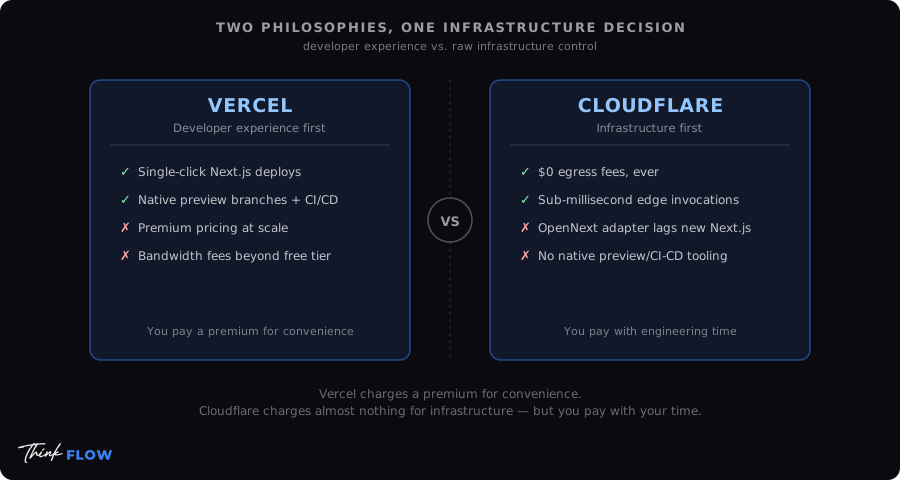
If you spend any time scrolling through Hacker News, Reddit, or X (Twitter) in 2026, you will witness a fierce, ongoing holy war: Vercel vs. Cloudflare.
On one side, Vercel offers an unmatched, luxurious Developer Experience (DX) that lets you deploy Next.js apps with a single click. On the other side, Cloudflare stands as an absolute fortress of infrastructure, offering globally distributed edge compute with a pricing model that feels almost illegal — including $0 bandwidth fees.
As a CTO, tech lead, or founder, you cannot afford to make this decision based on pure hype. Let us look at the hard architecture, analyze the unit economics, and figure out which platform actually saves your runway.
1. The Disruption: Why Cloudflare is Shaking Up the Frontend Space
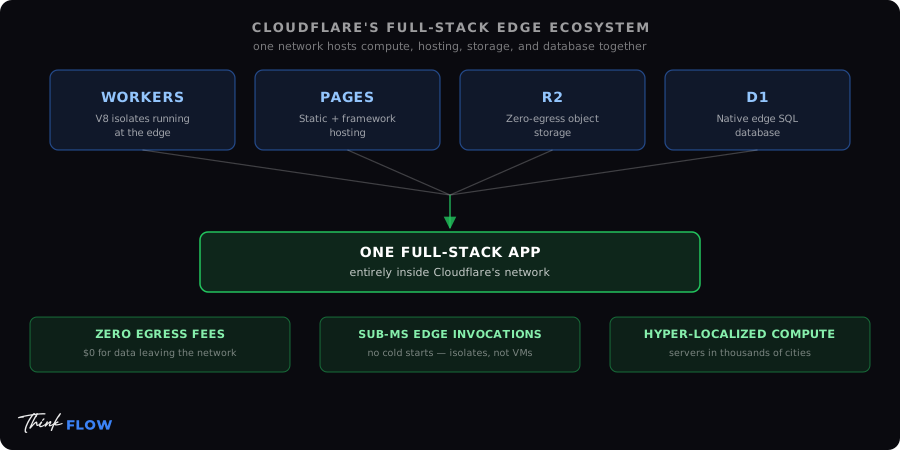
Historically, Cloudflare was just a DNS and CDN layer. Today, it is a fully mature cloud ecosystem. With Cloudflare Workers (V8 isolates running at the edge), Pages, R2 (zero-egress object storage), and D1 (native edge SQL database), you can host an entire full-stack enterprise application completely inside Cloudflare's network.
Why Cloudflare is a Developer's Haven in 2026:
-
Zero Egress Fees: Unlike AWS or Vercel, Cloudflare does not charge you for data leaving their network. If your app handles high-volume video streaming, large images, or massive JSON payloads, this feature alone can save you thousands of dollars a month.
-
Sub-Millisecond Edge Invocations: Cloudflare Workers boot up in less than a millisecond. There are no "cold starts" because they use isolates instead of standard virtual machines or containerized serverless functions.
-
Hyper-Localized Compute: Your code runs natively on servers inside thousands of cities globally, meaning your users get dynamic responses at the absolute speed of light.
2. The Real Catch: The Hidden "Developer Tax" of Cloudflare
If Cloudflare is so cheap and fast, why has not everyone abandoned Vercel? Because Cloudflare requires you to think like an infrastructure engineer, not just a frontend developer.
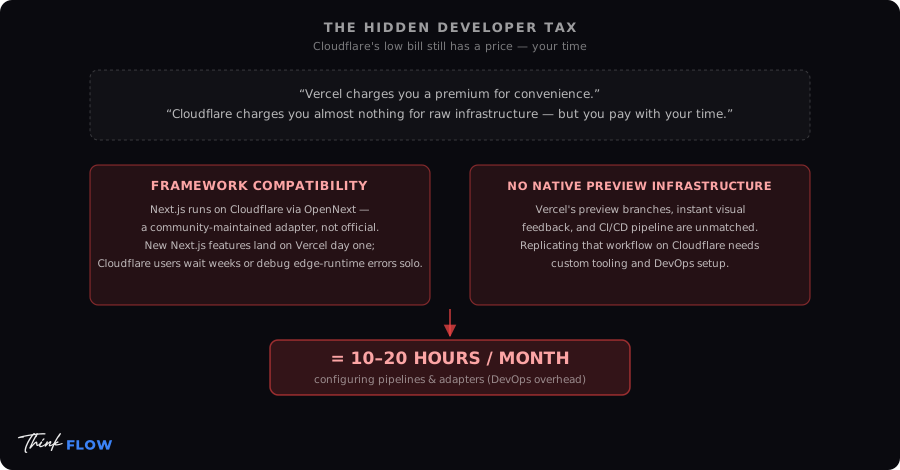
The Hard Truth: Vercel charges you a premium for convenience. Cloudflare charges you almost nothing for raw infrastructure, but you pay with your time.
The Friction Points of Cloudflare:
-
Framework Compatibility: While frameworks like Next.js can run on Cloudflare via OpenNext, it is a community-driven adapter. Whenever Vercel pushes a groundbreaking update to Next.js, it works seamlessly on Vercel on day one. On Cloudflare, you might have to wait weeks for adapters to catch up or debug obscure edge-runtime errors yourself.
-
No Native Preview Infrastructure: Vercel's automatic preview branches, instant visual feedback tools, and production-grade CI/CD pipeline are unmatched. Replicating Vercel's team collaboration workflow on Cloudflare requires custom tooling and DevOps setup.
3. The Cost Comparison: A Tale of Two Invoices
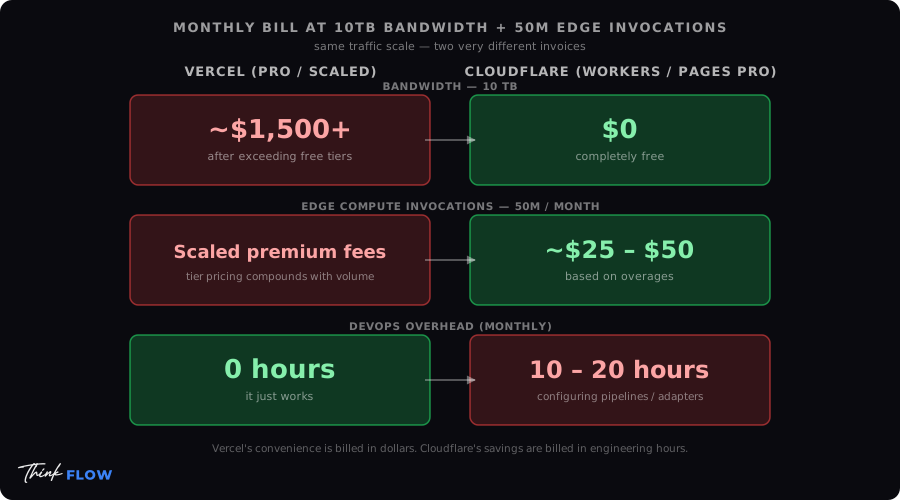
Let us look at how the math scales when your application hits 10 Terabytes of bandwidth and 50 Million edge function executions per month:
| Resource Type | Vercel (Pro / Estimated Scaled Cost) | Cloudflare (Workers / Pages Pro) | |---|---|---| | Bandwidth (10 TB) | ~$1,500+ (After exceeding free tiers) | $0 (Completely Free) | | Edge Compute Invocations | Scaled premium tier fees | ~$25 - $50 (Based on overages) | | DevOps Overhead | 0 hours (It just works) | 10 - 20 hours (Configuring pipelines/adapters) |
Verdict: Which One Should You Pick?
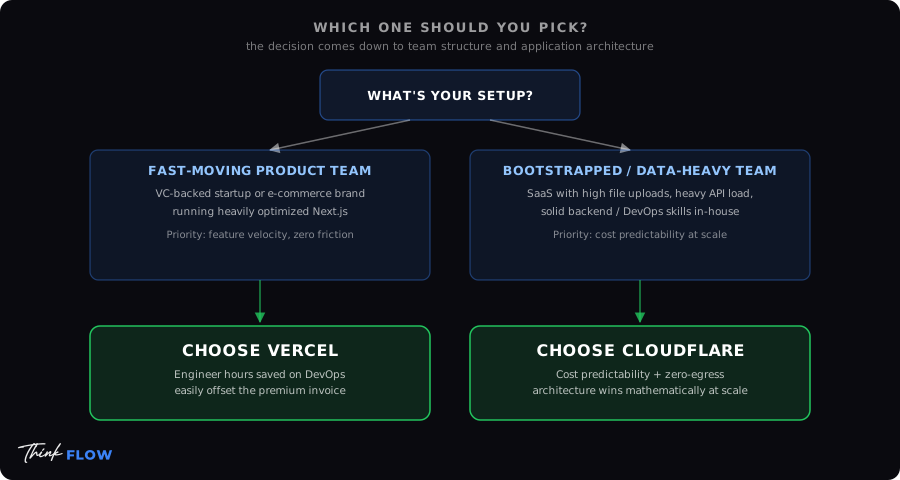
The decision comes down to your team structure and your application's architecture:
-
Choose Vercel if: You are a fast-moving product team, a VC-backed startup, or an e-commerce brand running heavily optimized Next.js. Your priority is feature delivery speed and frictionless deployments. The hours your engineers save on DevOps easily offset the premium invoice.
-
Choose Cloudflare if: You are building a bootstrapped startup, a data-heavy application (SaaS with high file uploads, heavy API requests), or you have a team with solid backend/DevOps skills. The cost predictability and zero-egress architecture make Cloudflare mathematically unbeatable at scale.
Sign Up for Cloudflare and Secure Your Infrastructure for Free
Affiliate Disclosure: This post contains affiliate links. If you choose to sign up through these links, I may earn a commission at no additional cost to you. We recommend Cloudflare based on its engineering architecture and production performance, not just its affiliate payouts.
Affiliate Disclosure
Some links in this article are affiliate links. If you make a purchase through them, we may receive a commission at no extra cost to you. See our full disclosure.
Daniel Burcea
AI Systems Architect. Building private AI infrastructure since 2025.Read more →