Firebase Alternative or Enterprise Grade? The Real Cost of Supabase in 2026
Deep dive into Supabase pricing, pgvector for AI applications, connection pooling strategies, and architectural rules to keep costs under control at scale.
When Supabase entered the market as the "Open Source Firebase Alternative," the dev community cheered. A managed Postgres database with real-time capabilities, instant APIs, and authentication out of the box sounded like a dream.
Fast forward to 2026. Supabase has evolved into a massive ecosystem supporting vector embeddings for AI applications (pgvector) and advanced edge functions.
But as your application scales from a few hundred beta testers to millions of active rows, does Supabase remain cost-effective, or are you walking into a vendor lock-in trap? Let us dissect the real ROI.
1. The 2026 Edge: Why Supabase Wins Over Traditional Databases
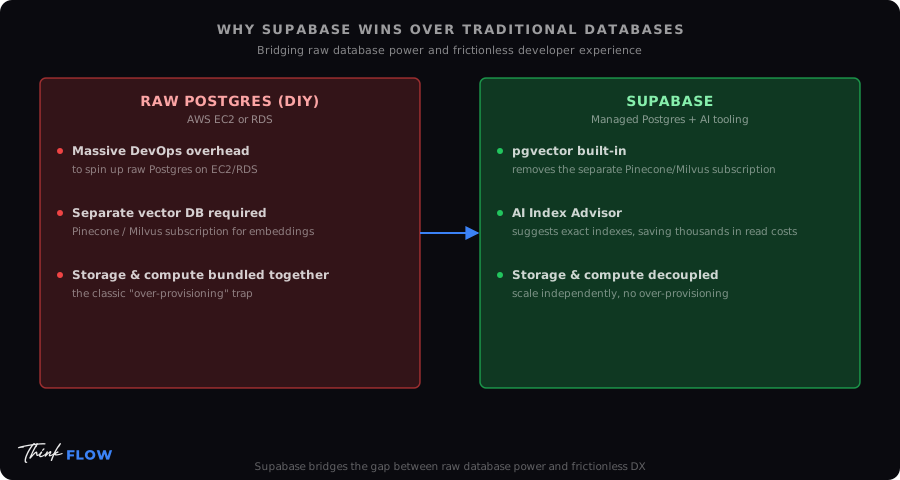
If you are building modern apps — especially those requiring AI integration — spinning up a raw PostgreSQL instance on AWS EC2 or RDS requires massive DevOps overhead.
Supabase bridges the gap between raw database power and frictionless Developer Experience (DX).
-
Native Vector Power (pgvector): In 2026, every application needs semantic search or LLM memory. Supabase handles high-dimensional vector embeddings directly inside your relational database, removing the need for a separate Pinecone or Milvus subscription.
-
Supabase Index Advisor: An AI-driven utility that analyzes your query patterns and suggests exact partial or composite indexes, saving you thousands of dollars in unoptimized database read costs.
-
Decoupled Storage & Compute: You can scale your database storage independently of your compute instance, preventing the classic "over-provisioning" trap.
2. The Elephant in the Room: Where Supabase Pricing Can Hurt
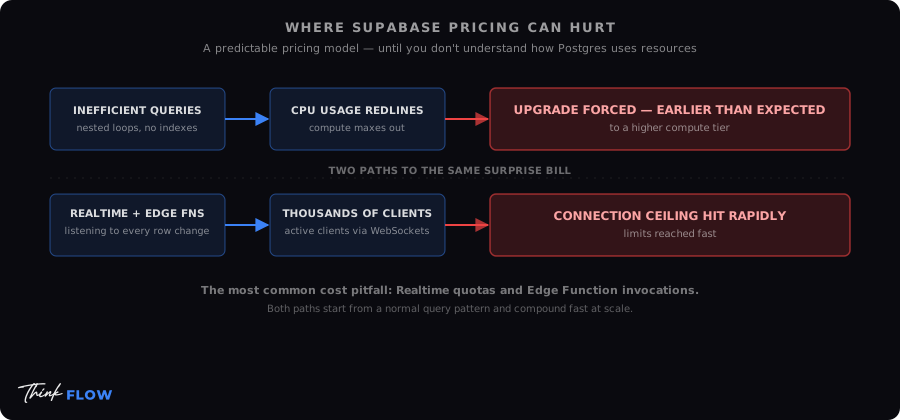
Supabase uses a predictable pricing model, but if you do not understand how PostgreSQL handles resources, you might get a surprise bill.
The Reality: Supabase gives you a real, unrestricted Postgres database. This means if you write inefficient queries with nested loops and no indexes, your CPU usage will redline, forcing you to upgrade to a higher compute tier much earlier than expected.
The most common cost pitfall? Realtime quotas and Edge Function invocations. If your app listens to every single row change across thousands of active clients via WebSockets, your connection limits will hit the ceiling rapidly.
3. Architectural Rules to Keep Supabase Cheap
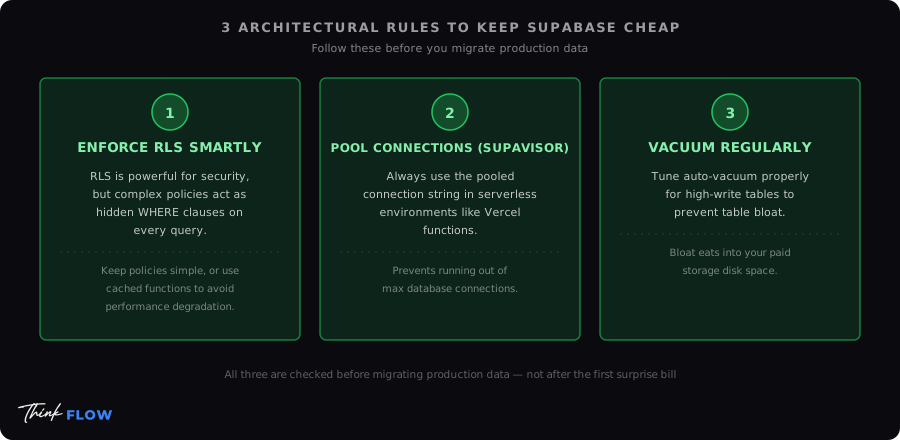
Before you migrate your production data, ensure your team follows these optimization guidelines:
-
Enforce Row Level Security (RLS) Smartly: RLS is incredibly powerful for security, but complex RLS policies act as hidden WHERE clauses on every query. Keep them simple, or use cached functions to avoid performance degradation.
-
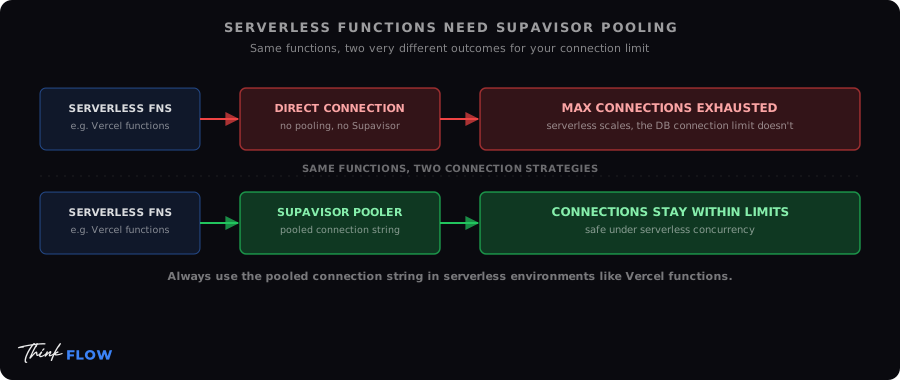
Connection Pooling (Supavisor): Always use the pooled connection string for serverless environments (like Vercel functions) to prevent running out of max database connections.
-
Vacuum Regularly: Ensure auto-vacuum is properly tuned for high-write tables to prevent table bloat from eating up your paid storage disk space.
Verdict: Is It Worth It?
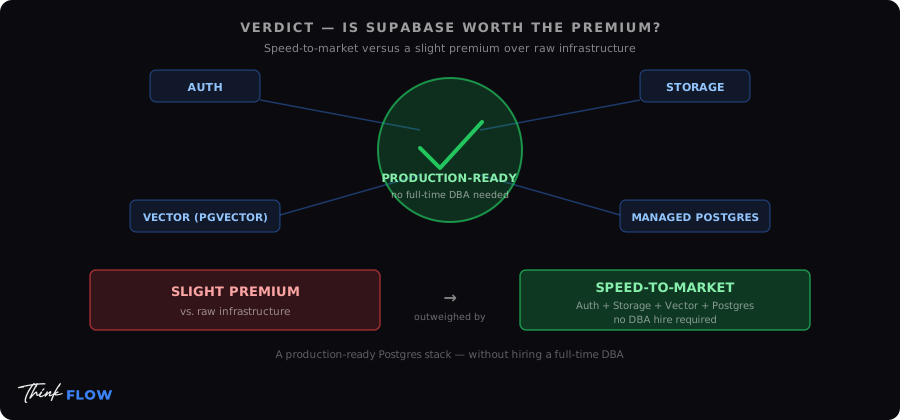
If you want a production-ready, scalable Postgres architecture with built-in Auth, Storage, and Vector capabilities without hiring a full-time DBA, Supabase is a no-brainer. The speed-to-market advantage far outweighs the slight premium over raw infrastructure.
Ready to scale your backend infrastructure without the DevOps nightmare?
Launch Your Free Supabase Instance and Start Building
Affiliate Disclosure: This post contains affiliate links. If you choose to upgrade to a paid plan through these links, I may earn a commission at no additional cost to you. We recommend Supabase based on its engineering architecture and production performance, not just its affiliate payouts.
Affiliate Disclosure
Some links in this article are affiliate links. If you make a purchase through them, we may receive a commission at no extra cost to you. See our full disclosure.
Daniel Burcea
AI Systems Architect. Building private AI infrastructure since 2025.Read more →