Topic: research
20 stories found
Yesterday
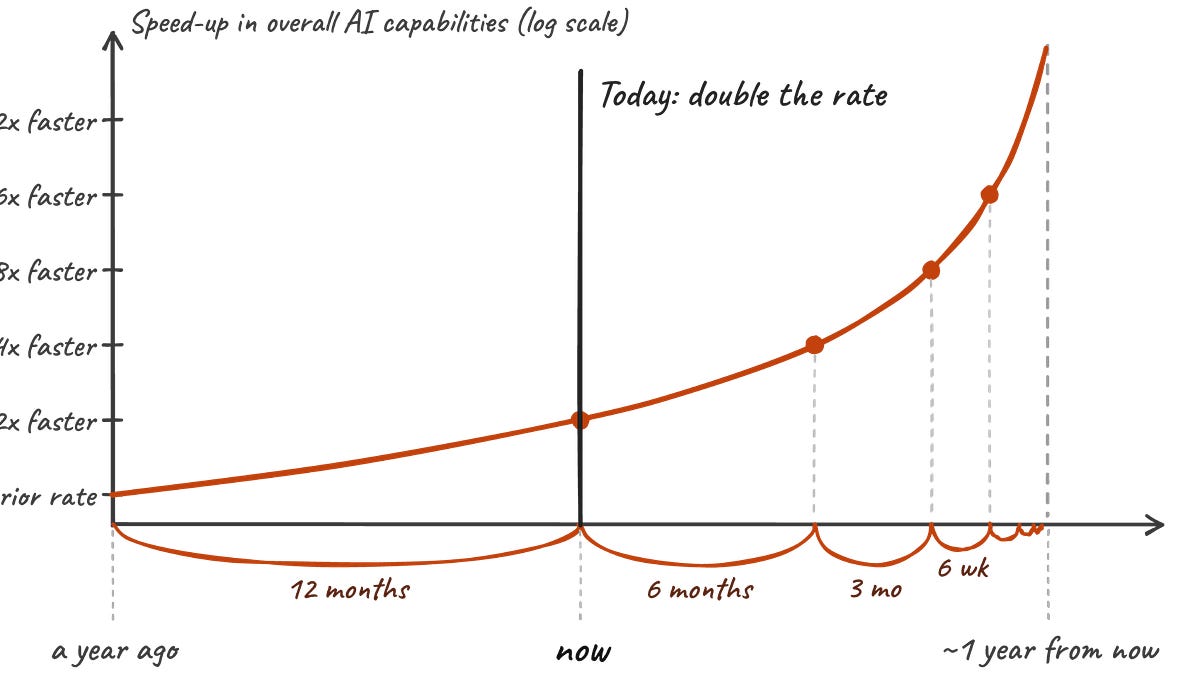
AI is dramatically accelerating AI research
AI is rapidly advancing its own field through faster data processing and model training, significantly reducing development cycles and costs. This acceleration is crucial as it propels innovations across various sectors, potentially transforming how technology evolves.
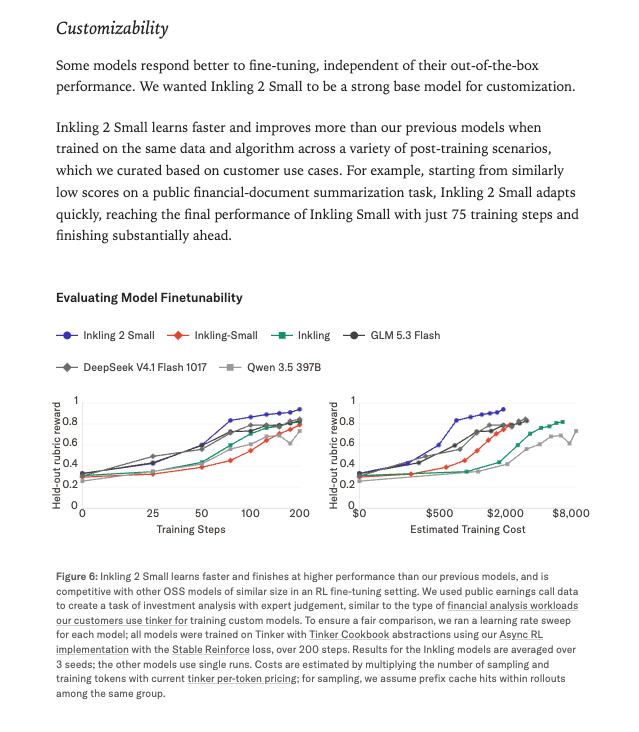
[AINews] Inkling 2 Small: 17A-594B trained in 68 hours on 12T tokens, beating Muse Spark
Inkleing 2 Small was trained in just 68 hours on 12T tokens, outperforming Muse Spark in a recent study by METR, highlighting rapid advancements in AI training efficiency. This achievement underscores the ongoing competition and progress in developing more capable AI models faster.
Thursday, November 5, 2026
Franklin Templeton uses OpenAI to support investment research
Franklin Templeton is integrating OpenAI's technology into its equity research processes to assist portfolio managers in comparing viewpoints and assessing investment risks. This initiative aims to enhance decision-making through advanced AI support, marking a significant step towards leveraging artificial intelligence in financial analysis.
Wednesday, November 4, 2026
From Fragmentation to Fusion: A Survey and Roadmap for Omnimodal Embeddings
A new survey and roadmap for omnimodal embeddings aim to bridge the gap between different modalities (e.g., text, images) in AI research, unifying disparate communities to enhance the performance of embedding models across various applications. This work is crucial as it could lead to more versatile and powerful AI systems that can better understand and process diverse types of data.
Tuesday, November 3, 2026
[AINews] LLMs can read & write neural network weights: "Weight Space Programming" cuts Autoresearch out of the RSI loop
Researchers have developed a method called "Weight Space Programming," allowing large language models (LLMs) to directly edit neural network weights, potentially eliminating the need for human intervention in refining AI agents. This breakthrough could significantly impact autoresearch by reducing reasoning loops and improving efficiency in training advanced AI systems like DeepSeek’s super-agent prototype.

How “reverse game theory” could keep AI agents in check
A new method called "reverse game theory" seeks to control advanced AI by creating systems that reward compliance with rules. This approach is crucial as AI capabilities grow, to ensure the models align with human values and intentions.
Monday, November 2, 2026
Rewarding defenders with bigger bug bounties
OpenAI increased Security Bug Bounty rewards and introduced additional bonuses to enhance the incentive for independent security researchers, aiming to improve system security through more robust reporting. This move highlights the growing importance of external contributions in identifying and mitigating vulnerabilities.
Comparative Evaluation of LLM-Based Review Paradigms for Academic Paper Quality Assessment
A new study explores different approaches to using large language models for assessing academic paper quality, addressing uncertainties about model structure, significance, and predictive power for research impact. This research is crucial as it aims to enhance peer review efficiency in the face of increasing submission volumes.
Saturday, October 31, 2026
OpenFrontiers: A Collection of Open Research Problems and a Benchmark for Scientific Rediscovery
OpenFrontiers introduces a database of open research problems to evaluate large language models' capabilities in solving complex scientific issues, addressing the current gap in benchmarking these models at a research level. This initiative is crucial for advancing AI's role in scientific discovery and innovation.
Wednesday, October 28, 2026
Lipi-Ghor: A Large-Scale, Diarized, Multi-Domain Bengali Speech Corpus and a Scalable Pipeline for Building It
A new large-scale corpus called Lipi-Ghor has been created for Bengali speech, addressing the under-resourcing issue in spoken language research by providing extensive, diarized, multi-domain audio. This corpus is significant as it offers a substantial dataset for improving Bengali speech recognition technologies.
20 of 20 items shown. Sources: 169 days indexed.